Showing posts with label Hermeneutic Circle Archives. Show all posts

Axel Schäfer on Countercultural Conservatives


Front CoverSchaefer_Axel 90x90As promised, I offer up an insightful interview with Axel Schäfer, who teaches at Keele University (UK) and directs the American Studies program there. Thanks to Axel for taking the time to do this! I asked him to talk about his book, Countercultural Conservatives: American Evangelicalism and the Postwar Revival of the New Christian Right. Its a great read.

(By the way, Schäfer's most recent book (2012) is Piety and Public Funding: Evangelicals and the State in Modern America with U of Penn Press... add it to your reading list!) 


Jared: How did this study come about?

Axel: Mainly because I was wondering how evangelicalism, whose egalitarian and democratic impulses had played such a significant role in nineteenth-century abolitionism, the women's suffrage movement, Populism and even American socialism, could ally itself so solidly with economic conservatism and the political Right.  In particular, I was interested in how evangelicals navigate the built-in tension between traditional morality and market economics, considering that capitalism, which effectively turns everything into a commodity, undermines the very moral code it operates on (as Daniel Bell has lucidly argued a long time ago).  In turn, I wanted to highlight the diversity, fluidity, and contingency of evangelical politics. 

J: What would you like Evangelicals to realize about themselves from having read your book?

A: I suppose I would like evangelicals to take heart by showing that the Christian Right became dominant on the basis of internal movement struggles, rather than simply on the basis of the natural proclivity of evangelicals for rightwing politics.  Although I agree that the evangelical Left was neither large nor deeply entrenched in the broader movement, it did pose a clear challenge to the evangelical establishment. Its advocates were highly educated, motivated, outspoken, and ready to shape the movement during a time of organizational and ideological upheaval.  Although it was ultimately not that difficult for the Right to sideline the Left, the conservatives’ own sense that they needed to reign in liberal and leftwing tendencies in order to assert themselves meant that they were profoundly shaped by their engagement with their adversaries.

J. How is your explanation of the rise of the Religious Right nuanced differently than that of others?

A: Most studies of the rise of the New Christian Right in the U.S. since the late 1970s locate the organizational and political resurgence of evangelicalism in the so-called “backlash” against what conservatives view as the excesses of the counterculture, the militancy of the Civil Rights movement, the iniquities of the liberal welfare state, the immorality of growing secularism, and the betrayal of God and country by the anti-Vietnam War protesters.  In many ways I see this image as an invention of later years when a fully formed Christian Right sought to construct a unifying historical narrative that ignored the internal battles, ideological compromises, political divisions, and sociocultural adaptations that preceded effective rightwing political mobilization. Seen from this angle, the backlash discourse was part and parcel of an effort to proscribe the internal evangelical debate by an ascendant Right.

J: The 1960s seem to be a pivotal era for your narrative. Why does this decade figure so prominently in your argument?

A: I consider the "long 1960s" (i.e. from the late 1950s to the mid-1970s) a crucial period of fragmentation and realignment for white evangelicalism in the United States--a time when the movement had emancipated itself from prewar fundamentalist militancy but had not yet coalesced into the New Christian Right. Nonetheless, the decade has received remarkably little attention from scholars of the evangelical resurgence.  In particular, I wanted to suggest that conservative Protestants not only rejected, but also shaped and transported sixties impulses in unexpected ways. Evangelicalism was intimately connected to key transformations in this polarized period, including in the areas of race and gender relations, youth culture, consumerism, and corporate America. The sixties were a formative period during which the burgeoning religious movement negotiated its relationship with, among other things, desegregation, feminism, deindustrialization, and the expanding welfare state. The decade was thus pivotal not solely because it provided a convenient enemy image, but because evangelicals participated in and were shaped by the very movements and developments they professed to oppose.

J: I was struck by the very last statement of the book:  "... the revivalist impulse can therefore inspire social movements with radically different sociocultural and economic agendas." Would you "unpack" this statement? Why did you conclude your narrative with this?

A: I think it is important to note that historically, evangelicalism doesn't just contain individualistic moralistic dimensions or serve as a normative legitimation for liberal capitalism, but also contains solidaristic, even collectivist impulses. For all intents and purposes, evangelicals are much closer to William Jennings Bryan than to Friedrich von Hayek or Milton Friedman.  Although the New Christian Right is the movement's most prominent and vocal political manifestation, it came about as a result of a tremendous organizational effort and skillful lobbying.  However, radical and liberal evangelicals continue to vie with the conservatives for political influence, and many in the fold are suspicious of economic conservatism and political liberalism alike.


Upcoming interview with Axel Schäfer on the rise of the Christian Right

Front CoverStopping by the book table at the most recent meeting of the Conference on Faith and History, I picked up a book with an interesting title: Countercultural Conservatives: American Evangelicalism from the Postwar Revival to the New Christian Right (2011), by Axel Schäfer. Axel is Director of the David Bruce Centre for American Studies at Keele University in the UK. I bought the book and discovered that he takes a compelling perspective on the rise of the Religious Right in America. I asked Axel to comment on it for Hermeneutic Circle and he was gracious enough to take time out of his busy life. Stay tuned ... I'll be posting the interview this week!

Brothers and Sisters

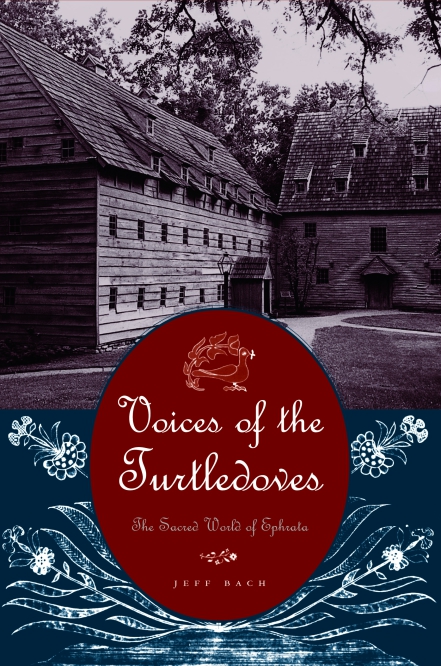
Tonight I got back from the Brethren World Assembly. As an introvert,  I am not always comfortable meeting lots of new people, but I really do admire the diversity in the Pietist/Anabaptist tradition. Tradition is such a bid deal for the Brethren ... it is sometimes not appreciated in the nondenominational evangelical world. I was also reminded of the fact that smaller denominations with a strong sense of identity seem to gravitate toward the study of history at a much deeper level that most lay circles. I find this produces a special appreciation for historical/theological scholarship. Highlights for me were getting to hear Dale Stoffer, Aaron Jerviss, Jeff Bach, Karen Garrett, Denise Kettering Lane, Bill Kostlevy, and Carl Bowman. Some of their recent titles include:

book cover
This week I leave for the fifth meeting of the Brethren World Assembly, a gathering of Brethren folks from the various denominations who trace their heritage to the pietist Alexander Mack, founder of the 18th century “new Anabaptists” at Schwarzenau, Germany. This meets every five years and this time around I have been asked to speak on a topic related to Brethren spirituality and “community, family, and individual.” I've chosen to focus on three historical personalities who were all part of the Brethren tradition but have diverse experiences: Peter Nead was an important 19th c. representative from the Old German Baptist Brethren; Estella Myers was a missionary pioneer to Africa; and Herman Hoyt was the second president of Grace College and Theological Seminary here in Winona Lake Indiana. I hope to flesh out the sense of historical “place” for each of these individuals and then reflect on some of the tensions and issues regarding community/family/individual. The gathering meets at the Brethren Heritage Center in Brookville, OH.

Newly Discovered Johannes Kelpius Source


Painting of KelpiusThe Kelpius Society is shedding light on a newly discovered manuscript attributed to Johannes Kelpius, a mystical visionary who created an early monastic community, sometimes called The Society of the Woman in the Wilderness, along the Wissahickon Stream near Philadelphia. A few years ago I spend a few hours traipsing around the Wissahickon basin and visited the root cellar which is said to have been a hermitage used by Kelpius. I've also found mention of members of the society in Moravian sources of the period. I've been fascinated with this mystical order ever since. Yet this legendary society, which was within the same orbit as the Moravian community at Bethlehem and the Brethren society at Ephrata, is shrouded in mystery due to a dearth of sources but is testament to the religious diversity and pietist experiments in colonial Pennsylvania. According to expert Kirby Don Richards,

For the first time in a century, a new work by Johannes Kelpius has been discovered. Mr. Richard Ackner, a direct descendent of Kelpius’s brother Georg, made this exciting discovery at the Manuscript Department of the Library of the City of Sighiṣoara, Romania, listed in the catalogue as Manuscript 505.

As Long as its MLK’s vision of American Ideals


Morally sensitive efforts to wrestle with American history inevitably lead to being confronted with the fact that the United States, like every nation, has consistently perpetuated injustice. It tempers one’s enthusiasm for one’s country. The legacy of Martin Luther King Jr. came up in class the other day and it reminded me what had struck me about a local MLK day celebration I had attended last month. I was reminded of the ironic fact that MLK embraced America. If there was ever an individual who had reason to be cynical about the ideals of liberty and justice for which the United States says it stands, it was him. Yet for King, these ideals still held meaning; these ideals transcended America’s moral failings. I realized that its not so much that American ideals of justice don’t exist, but rather I have been distracted by visions of justice that revolve around stubborn individualism and 2nd amendment rights, the persistent reality of systemic inequality, angry culture wars, or dishonest appeals to history. In a context in which differing visions of America’s moral fiber seem to exist in competition with one another, King represented a more transcendent, genuinely authentic version of American justice. And seeing things in a fresh way has restored a measure of my own optimism about American ideals, as long as its MLK’s vision of those ideals.

Friedrich Christoph Oetinger and “All Truth is God’s Truth”


An excerpt from an ongoing writing project:

In countless Christian colleges and universities today, the phrase “All Truth is God’s Truth” has become a frequent part of conversations about the “integration” of faith and learning. The notion that truth is true no matter where one happens to discover it has been popularized by educators in the Reformed tradition and, at least in its modern context, is rooted in the work of Abraham Kuyper, an influential Dutch theologian and statesman in the 19th century. In this model, the integration of faith and learning is a means of “reforming” the knowledge of the world—that is, reshaping the conclusions of one’s academic discipline so that it conforms to Christian principles. These Christian principles are often referred to as a “worldview,” or a foundational lens or framework through which we view the world and engage in the process of organizing knowledge and determining truth.

Yet the notion that truth is unified by its transcendent quality, no matter who advances it or how it is discovered, is not simply a Reformed idea. The unity of truth was an important idea for the late Medieval mystics -- rooted in a belief that everything that exists shares an essential unity that was rooted in God as the originator of all things. While scholastics (the champions of orthodoxy) recognized the heterodox tendencies in mysticism – that it blurred the qualitative distinction between God and the created order – the idea that all truth shared a common connection with the Divine provided a profound platform for human discovery. For such mystics, the path toward true knowledge could begin with thoughtful examination of God’s universe. This mystical emphasis on the unity of truth found expression among pietists such as Friedrich Christoph Oetinger. Oetinger is hardly a recognizable name and is not as well known as other pietist leaders. Yet he was an important part of a circle of Pietists centered around Württemberg, in the early decades of the 18th century. Oetinger, whose eclectic interests included alchemy, pursued the knowledge of God in an integrated way that reflected his respect for the Bible as well as scientific discovery. Oetinger claimed that truth, whether found in “holy things” such as the Bible, or in “nature” which he studied through his alchemic experiments, was united in internal “harmony.” “In so skeptical a time,” Oetinger declared, “the truth of God in nature and Scripture is my basis.”[1] While evangelicals today may be wary of more mystically inclined pietists such as Oetinger, it is important to note that the idea of “All truth is God’s truth” was not foreign to the pietist tradition and can be found within this stream long before Kuyper articulated it so well.


[1] Friedrich Christoph Oetinger, “A Confession of Thought” in Peter C. Erb, ed. Pietists: Selected Writings (New York: Paulist Press, 1983) 277.

History’s “Mankind” Lacking Credible Take on Crusades


The History Channel took the path of least resistance tonight in its portrayal of the Crusades (“Mankind: The History of All of Us”). Theirs was a predictable perspective, which will no doubt reinforce popular perceptions of the crusades as religious fanaticism writ large. Never mind the complex interplay of politics, economic motivations, and the thirst for empire that augmented religious aspirations. Neither Muslims nor Christians, in fact, would have seen “religion” as an independent category in the way that we understand it. It’s a seductive oversimplification, though, and one that fits well with the pervasive “Clash of Civilizations” thesis (Ala Samuel Huntington)  that continues to frame common notions about the relationship between Christianity and Islam. 

It also reminds me that I still need to read Cavanaugh’s Myth of Religious Violence. 

Devin Manzullo-Thomas Reflects on Evangelicals and Brethren in Christ


Earlier this fall, I had the opportunity to be involved in the 2012 Conference on Faith and History at Gordon College. I intended to blog about it, but ... well, it just didn't get done. But recently, Devin Manzullo-Thomas has provided some great reflections on his own involvement, including a panel that I also helped with. He writes about the tensions regarding evangelicals and Anabaptists – a topic with which I also wrestle. You can find his piece in the Mennonite World Review here. 

McKnight Offers Reflections on The Activist Impulse


I feel privileged that Scot McKnight would offer some gracious words about The Activist Impulse on his blog. Here's a snippet: 
... But the two branches that ought not to be politicized are those that have suffered ostracization and marginalization. Two groups come to mind, the evangelicals in the USA who were outed and ousted in the modernist-fundamentalist debates and the Anabaptists who not only were hunted and persecuted but alongside the fundamentalists in the USA developed a non-political, anti-political and de-political theology.
But the last thirty years reveal complicity and compromise by both sides. Evangelicals tilted so far Right they are now nearly equated with the Right; about 80% vote Right. I don’t know the votes by historic Anabaptist churches but they have become more or less Left ... 
The full post can be found here.

Processing Evangelical History at Winona Lake


I have been sidetracked lately ...  taking more of a leadership role in the archival materials housed at Grace College. Besides the college and seminary archives and the collections of the Fellowship of Grace Brethren Churches, we have a wonderful collection of records and artifacts related to Winona Lake history, which was an important Chautauqua site before it became a major center for the evangelical movement in America (and the home of Billy Sunday). But there is plenty of cataloging to do, some necessary storage improvement and finding aids to create. Thankfully I have a few history students who are looking to help! The long term goal is to put together a joint archive with plenty of opportunities for researchers. 

More From Jay Case's Unpredictable Gospel

What follows is the second part of my interview with Jay Case about his new book, An Unpredictable Gospel. You can find the first part here.

Jared: If you were to compare and contrast how these Protestant denominations fit into your overall narrative, what would you say?

Jay: Hmm. I don’t know if I can give an adequate compare/contrast in less than 320 pages. But I’ll say this: there is a lot of diversity and complexity out there. Different individuals working for different evangelical traditions in different cultures around the world in different eras….it gets complicated. What they have in common is evangelicalism. Thus, I see some general patterns, stemming from those evangelical commitments, which play out in diverse ways. I use a common four-part historical definition of evangelicalism (the need for a personal commitment to Christ, biblical authority, the command to evangelize, and an emphasis on the atoning work of Christ) as the foundation to explain missionary actions. In their own way, each of these four characteristics creates paradoxical dynamics in the evangelical relationship to culture, power and influence. And so…well, readers will have to buy the book to figure out how that plays out.

Jared: Do you think any of your conclusions or arguments about missions would be surprising to many evangelicals? To secular-minded readers? If so, what would these surprises be?

Jay: Evangelicals who aren’t deeply acquainted with the missionary movement might be surprised to discover that missionaries have always been lousy at converting large numbers of people. There are important dynamics of power and culture at work here that explain why – and they won’t surprise evangelicals who are familiar with the missionary movement. Evangelicals might also be surprised to find out that world Christianity has had an impact on American evangelicalism. For instance, a movement of Christianity in Burma among the nomadic Karen people in the 1840s and 50s directly influenced northern evangelical support for African American colleges in the American South in the 1860s and 70s. I argue that, essentially, without evangelical movements of world Christianity in Asia, Hawaii and Africa in the early 19th century, we wouldn’t have colleges like Morehouse, Spelman, Fisk, or Howard. It’s a strange connection. However, I believe that movements of world Christianity have affected American evangelicalism and American culture, via the missionary movement, in ways that we just haven’t noticed because we haven’t ever thought to look for them.

Secular-minded readers might be surprised by my claims that missionaries tended to be less racist and less ethnocentric than any other group of Americans in the 19th century. That includes most intellectuals and academics from that century. Now, before evangelical readers get too triumphant about this, I should explain that it wasn’t because evangelical missionaries were naturally more ethical on these issues than other Americans. They carried plenty of racism and ethnocentrism with them to other cultures. But there were dynamics within the missionary engagement that challenged missionaries (consciously or unconsciously) to adjust their practices and thinking about people from other cultures. Unfortunately, few evangelicals thought deeply or systematically about these things, so they didn’t always effectively implement insights into later policies. So missionaries kept making similar mistakes over the years. We evangelicals have been much better at promoting active ministries than forming careful theology.


Jay Case on Evangelicals and World Christianity

Jay R. CaseJay Case teaches at Malone University in Canton, Ohio and I am a fan of his new book, An Unpredictable Gospel: American Evangelicals and World Christianity, 1812-1920 (Oxford, 2012). This is the first of two installments of my interview with him about the book.

By the way, Case blogs at "The Curcuit Rider."


Jared: How did you get interested in the history of Protestant missions and how does your book fit into current scholarship about this topic?


My wife and I taught at a school in Kenya for missionary kids, Rift Valley Academy, between 1986 and 1993.  It was a truly amazing and transformative time in my life in many ways.  Living in Kenya provoked about 47 different questions in my mind about Christianity, culture and missionaries.  So when I went on to graduate school in American religions history at Notre Dame I wanted to try to figure out answers to some of those questions in my dissertation.  I answered a few, but about 83 more questions were provoked in that process.  The long-term result of all that is my book.  I still have questions, though.The book fits pretty well into work done by missiologists (theologians and historians who study the theology and history of missions).  It draws upon work done by scholars like Andrew Walls, Lamin Sanneh, Brian Stanley and Dana Robert.  However, there doesn’t seem to be a great deal of crossover influence between missiologists and American historians.  Most (but not all) of the work on missionaries done by American historians operates out of a Cultural Imperialist or post-colonial school of thought.  Some of what I do in this book is consistent with the general thrust of those schools, but some of what I do challenges them.  So we’ll have to see how the American historians react.  

Jared: In the book you write about Baptists, Methodists, the AME Church, and the Holiness movement. How did you come to focus on these groups?

Jay: I grew up Methodist and I married a Baptist. Research is often autobiographical in some way, isn’t it? But there is more to it. Most of the scholarship on 19th century missionaries focuses on the well-educated groups of the Protestant establishment, like Congregationalists and Presbyterians. Methodists and Baptist often just get thrown in as less eloquent versions of the same thing. However, in graduate school I came across the Baptist leader Francis Wayland who argued in 1854 that missionaries should be careful not to de-nationalize converts or try to turn mission stations into little European cities. I had to figure out how he got to the point where he could say this kind of thing seventy years before anthropologists were thinking this way about culture. Then I began looking at the Methodist missionary William Taylor who was arguing for a color-blind missionary policy in the 1870s. At that point, I began to think that there might have been democratized dynamics among the Methodist and Baptist traditions that produced different missionary dynamics than the more established Reformed traditions.

More to come ...

Final Installment of my Interview with David Swartz

Jared: What is the relationship between those we might call “neo-Anabaptists” and the evangelical left? Wouldn’t a truly Anabaptist ethic mean that one would need to resist identifying with either the Left or the Right?


David: Before answering the question, I should discuss briefly the dilemma I had in what to call the subjects of my research. There were several options. Were they progressives, moderates, leftists, or consistent-life practitioners? Well, they were all of the above—some quite conservative on certain issues and quite progressive on others. I actually thought about using the inelegant term “evangelical non-right.” That wouldn’t have sold many books, but it was probably the most accurate since my research subjects occupied just about every position on the spectrum, sometimes multiple positions on the spectrum simultaneously. Where do you place on the left-right continuum someone who is against abortion and capital punishment?
All that said, many neo-Anabaptists populate the evangelical left. But that doesn’t necessarily mean they had much loyalty at all to the broader American Left. Take, for instance, the Post-Americans (the group that would eventually be called Sojourners). Seeing their primary identity as global Christians and committed to the Church, they were suspicious of any temporal structure or political label. It probably would be most accurate to call them New Leftists, and as such, they critiqued liberals and conservatives alike. They thought the idea that liberalism’s essentialist creed of equality would gradually end segregation and achieve military victory in Southeast Asia was naïve and ridiculous. Only direct protest could end segregation. They saw big government as oppressive in its global imperialism. Similarly, they saw the conservative commitment to big business as economically oppressive.

Progressive social action outside of electoral structures, practiced by neo-Anabaptists and many others, stands as one of the principle legacies of the evangelical left. Its political relevance goes well beyond its marginal influence on the Democrats or Republicans. It has helped to launch engagement around a much broader array of issues—from African poverty to peacemaking to simple living—to which neither party pays much attention. In fact, third-way action outside electoral politics may be the future of evangelical social action, which may fit their idiosyncratic interests and views. Researchers at Baylor found that evangelicals who read the Bible every day are more likely to favor more humane treatment of criminals, to be more concerned about issues of poverty and conservation, and to more clearly oppose same-sex marriage and legalized abortion than evangelicals who do not. Evangelicals, anti-confessional and revivalist in sensibility, are more religiously and politically creative than the electoral structures that try to contain them.

Jared: Many CCCU schools, such as Grace College (where I teach), are what George Marsden has described as “post fundamentalist.” Is there any hope that we can eventually reflect the kind of diversity that exists in the broader evangelical landscape given our fundamentalist past?

David: The short answer is “Yes—eventually.” Some evangelicals, for reasons I discuss in the book, are now tied to conservative politics and the Republican Party through identity politics. That is, they vote Republican because their parents did and because the media says they should. But historically and globally, evangelicalism has shown the capacity for stunning diversity. And in the United States now, even within the Republican Party, more young evangelicals are talking about peace, poverty, and caring for God’s creation.
A lot depends on outside conditions. Prior to the 1970s the Republican Party was arguably less pro-family and pro-life than the Democratic Party. But activists pushed the Democrats decisively in a pro-choice direction. The structural conditions that brought down the evangelical left in the 1970s and 1980s might be changing. More and more Americans are becoming pro-life on the abortion issue. If that trend continues and anti-abortion views become more common across the political spectrum, the Democratic Party may be forced into reconsidering its pro-choice orthodoxy (though that seems a bit hard to imagine after this year’s convention!). And, in turn, some evangelicals who hold progressive stances on economics and diplomacy may feel released from Republican identification because of the abortion issue.
That said—and I’m speaking more as a theologian than a historian now—I’m not entirely certain that success, at least in the way that the religious right “enjoyed” it, is something that any Christian should want. Its success depended largely on money, coercion, and demonization of “the other” (which, to be sure, is a temptation for each side)—all elemental political realities that Jesus clearly warned against. I worry that those who identify very closely with one political party—whatever party it is—will be tempted to compromise their faithfulness and their ability to speak out prophetically on issues that matter to us as disciples of Christ.

Heading to Moravian Conference in Pennsylvania

I leave today to give a paper at the 2012 Bethlehem Conference on Moravian History and Music in Bethlehem, PA. Although I won’t make it in time, Peter Vogt, a fine historian and Moravian pastor in Europe will be delivering the Moses Lecture tonight on the campus of Moravian College. A live stream of the lecture can be found here.
On Saturday, I will be talking about how the memory of Moravians and other pietists has been used by nineteenth and twentieth century evangelicals to promote a particular identity. The paper is called “From Heretics to Saints: Moravians in the Evangelical Imagination.” The full program can be accessed here.

Jay Case, historian at Malone University in Ohio is blogging at The Circuit Rider - a blog he hopes will connect with a more popular crowd, or as he says, "the average person in the pew."

Jay has a recent book out with Oxford Press, called An Unpredictable Gospel: Evangelicals and World Christianity, 1812-1920, in which he takes a fresh look at the history of Protestant missions. (I also mentioned it here in a previous post.)

I will be interviewing him about the book soon ... so stay tuned.

More from David Swartz on the Evangelical Left


Here's the second installment of an interview with David Swartz about his new book: Moral Minority: the Evangelical Left in an Age of Conservatism:

Jared: Considering that many American evangelicals would see themselves on the Right, why should they take this topic (the Evangelical Left) seriously?

David: First, there are more evangelicals on the left and center than most people realize. In most elections, between 25 and 35% of evangelicals vote Democratic (and many more are comfortable with progressive positions, but vote Republican primarily because of abortion). That’s a minority of evangelicals, but still a lot of people!

Second, there’s nothing inevitable about evangelicals taking conservative positions on a multitude of issues ranging from poverty, economics, capital punishment, and war. In fact, historically evangelicals often have been quite progressive in the United States. And globally evangelicals often scratch their heads at the American evangelical alliance with the Republican Party. The story of the evangelical left (and why it couldn’t keep pace with the religious right) helps make sense of why political conservatism is so closely tied to evangelicalism.

Third, the evangelical left helped broader evangelicalism to think structurally and socially. An excerpt from the last paragraph of the book articulates this point: “If a unified politics continued to elude evangelicals, political involvement itself did not. Evangelicals agreed by the end of the first decade of the new millennium—in far greater proportion than fifty years before—that the Gospel calls for holistic, not just personal, transformation. Followers of Jesus, evangelicals say almost in unison, must take up cultural, social, even political responsibilities. The evangelical left, representing one of the most serious postwar attempts to mobilize evangelicals for organized political action, hastened this broader plunge toward a sense of corporate obligation and activism, electoral and beyond. It carved out space for the rhetoric and activism of social justice—on both the left and on what became a much larger right. Even if evangelicals did not agree precisely on what the public good looks like, they no longer had to legitimize participation in debate over the public good itself.”

Jared: Why do those on the evangelical Right and the Evangelical Left find it so hard to get along? What can all evangelicals do, no matter their politics, to promote more irenic coexistence?

David: Speaking now self-consciously as a Christian, I suggest actually doing church together. The Mennonite church I attend in Lexington, Kentucky, contains the full spectrum of political involvement (and non-involvement). We occasionally talk politics, but our primary interactions revolve around worship, discipleship, eating food together, and serving the community together. Because we spend a lot of time together and because our focus is on churchly activities, it seems like passion for electoral politics inevitably diminishes. Face-to-face, embodied relationships (as opposed to Facebook debates) breed empathy. Jonathan Haidt, one of the most perceptive commentators on the contemporary culture wars, has offered a similar suggestion for Congress. He writes, “Other changes would work more gradually by making it easier for politicians to recover the sort of human relationships that have always lubricated the gears of government. For example, in 1995 Newt Gingrich changed the legislative calendar to encourage House members to keep their families in their home districts, rather than moving to Washington where they often fraternized with the enemy. Nowadays, all business is conducted midweek. Many members fly in on Tuesday morning and fly home Thursday evening, leaving few possibilities for meeting members of the other party off of the battlefield and out of sight of the press.”

Context also matters. When we understand the religious and cultural circumstances out of which our political enemies (and ourselves) emerge, we also learn empathy. Thinking narratively helps us to think less in terms of winning an argument and more in terms of finding common ground and cultivating spiritual virtues. Evangelicals would do well to follow the advice of St. Peter: “make every effort to add to your faith goodness; and to goodness, knowledge; and to knowledge, self-control; and to self-control, perseverance; and to perseverance, godliness; and to godliness, mutual affection; and to mutual affection, love.”

Eric Carlsson reviews Edited Volume on Pietism

University of Wisconsin-Madison professor, Eric Carlsson has written a thoughtful review of  Pietism in Germany and North America, 1680-1820 on the Humanities-Net site "H-German." This substantive volume was edited by Jonathan Strom, Hartmut Lehmann, James Van Horn Melton.

Find the review here.

My Interview with David R. Swartz on the "Moral Minority"

David Swartz, a friend of mine who teaches history at Asbury University has just published Moral Minority: The Evangelical Left in an Age of Conservatism with the University of Pennsylvania Press. You can find more information at his thought provoking blog.

Recently I asked David about the book, his goals for writing it, and what other evangelicals could learn from his research. This is the first of three installments from my interview with David.


Jared: How did this book materialize? How does it connect to you personally?
David: Professionally, it was important that I find both archival materials and a gap in the scholarship of American religious history. When I read a piece by Ron Sider online suggesting that some “enterprising graduate student” take a look at the Evangelicals for Social Action archives, I knew immediately that I had a project.

On a more personal level, this project was an attempt to figure out my own parents (all history is ultimately autobiography, right?). They had grown up in the 1970s. They ran a pretty egalitarian marriage. They sang “They Will Know We Are Christians by our Love” during worship services and would have been dismayed by an American flag in the church sanctuary. I ate food my mother (and father!) cooked out of More-with-Less, a cookbook with lots of vegetarian recipes. And I knew many like them, people who were not comfortable with the idea of American as a Christian nation, with a budget that prioritized the military over poverty, a punitive criminal justice system, and the like. And yet they shared their faith and lived out the kind of warm piety so common within evangelicalism. This was an idiosyncratic combination that I never read about in news reports and scholarly books. So I dedicated my research to learning about non-rightist evangelicals. How common were they? Why did they seem so marginalized?

Jared: What are a couple goals you would like this book to accomplish?
David: I wrote this book with several audiences in mind. For non-evangelical scholars and observers, I wanted to complicate perspectives on theologically conservative Christians. So many of my research subjects have had to qualify their evangelical identity by saying things like “I’m not that kind of evangelical!” There are millions and millions of evangelicals who won’t vote for Mitt Romney (because they’ll vote for Obama or not vote at all) or won’t otherwise resonate with politically conservative sensibilities. I want to promote awareness of evangelical cultural, racial, and political diversity.

For evangelical readers, I want to offer a sense of context. Just about everyone, folks on the right and the left, seem so certain that they’re correct, that there’s a direct line from the Bible to the ballot box. But everyone comes to faith and political commitments out of a particular history. Given different historical and cultural circumstances, we could have very different views about poverty, war, capital punishment, and gender roles. This ought to inculcate a profound sense of humility—and hopefully an instinct to conduct more civil discussions.

Now on Twitter

I was inspired to see #CFH2012 trending so well that I've taken the plunge into the Twitter universe. (With the expert help and encouragement of my students I must say)!